Home blood pressure monitoring is essential for managing heart health and preventing cardiovascular problems.
Many people are drawn to wrist blood pressure monitors because they are compact, easy to carry, and appear convenient.
However, despite their appeal, there are significant accuracy and reliability concerns that make upper-arm monitors a safer choice for most individuals.
If you’re considering buying a wrist monitor, it’s crucial to understand the potential pitfalls and what experts recommend.
Accuracy Concerns with Wrist Monitors
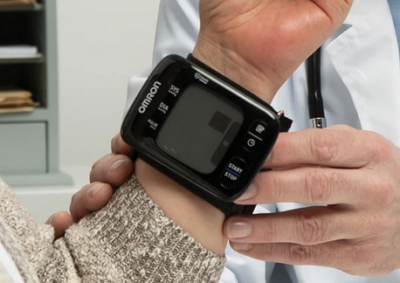
Unlike upper-arm monitors, wrist blood pressure monitors are extremely sensitive to positioning. Even slight deviations from the recommended position can cause major inaccuracies.
For instance, if your wrist isn’t precisely at heart level, your readings may be falsely high or low. Proper use requires aligning the cuff exactly with the radial artery and keeping your wrist perfectly still during measurement—a challenge for most users.
Clinical evidence supports these concerns. A study published on PubMed found that wrist readings were on average 16 mmHg higher systolic and 6 mmHg higher diastolic compared with standard upper-arm readings.
This discrepancy can lead to unnecessary worry or, worse, mismanagement of blood pressure.
Another review in AHA Journals concluded that wrist self-measurement frequently results in falsely elevated values, making it unreliable for consistent home monitoring.
Consumer Reports and medical experts reinforce this view, stating: “In most situations, any given arm device is going to be more accurate than any given wrist device.”
Even validated wrist monitors may fall short.
According to Harvard Health, up to 83% of wrist monitors and 79% of upper-arm monitors sold on Amazon lacked proper clinical validation.
This highlights that convenience does not always equal reliability.
Validation Matters and Upper: Arm Models Take the Lead
Accuracy in blood pressure measurement isn’t just about convenience—it’s about validation.
The American Medical Association (AMA) maintains a Validated Device Listing (VDL™), which is a trusted resource for finding blood pressure monitors that have been reviewed and confirmed for clinical accuracy.
Using a device from this list can significantly reduce the risk of inaccurate readings.
Validated upper-arm monitors remain the gold standard for home blood pressure monitoring.
They are less sensitive to positioning errors and generally produce readings closer to those obtained in a clinical setting.
If you rely on your readings to adjust medications, track progress, or manage hypertension, using a validated upper-arm monitor is usually the safest route.
You can explore the AMA’s validated device list here: ValidateBP.org
Tips if You Choose a Wrist Monitor
If you still prefer a wrist monitor for portability or comfort, follow these steps to improve accuracy:
Sit quietly for 5 minutes before taking a reading.
Keep your wrist at heart level while measuring.
Take multiple readings and average them.
Compare your wrist monitor’s readings against an upper-arm monitor periodically.
While these steps help, they cannot fully eliminate the inherent accuracy limitations of wrist devices.
Validation Matters and Upper-Arm Models Take the Lead
Accuracy in blood pressure measurement isn’t just about convenience—it’s about validation.
The American Medical Association (AMA) maintains a Validated Device Listing (VDL™), which is a trusted resource for finding blood pressure monitors that have been reviewed and confirmed for clinical accuracy. Using a device from this list can significantly reduce the risk of inaccurate readings.
Validated upper-arm monitors remain the gold standard for home blood pressure monitoring.
They are less sensitive to positioning errors and generally produce readings closer to those obtained in a clinical setting.
If you rely on your readings to adjust medications, track progress, or manage hypertension, using a validated upper-arm monitor is usually the safest route.
You can explore the AMA’s validated device list here: ValidateBP.org
Tips if You Choose a Wrist Monitor
If you still prefer a wrist monitor for portability or comfort, follow these steps to improve accuracy:
Sit quietly for 5 minutes before taking a reading.
Keep your wrist at heart level while measuring.
Take multiple readings and average them.
Compare your wrist monitor’s readings against an upper-arm monitor periodically.
While these steps help, they cannot fully eliminate the inherent accuracy limitations of wrist devices.